The only thing you can buy that’s guaranteed to make you happier, backed by science
An entrepreneur friend of mine struggled to balance business and family. Business usually won, since professional demands often feel more urgent. Miss a school event because of a shipping problem? You feel bad about it, but you promise yourself you’ll make the next one. Miss dinner with your family…
An entrepreneur friend of mine struggled to balance business and family. Business usually won, since professional demands often feel more urgent.
Miss a school event because of a shipping problem? You feel bad about it, but you promise yourself you’ll make the next one. Miss dinner with your family because you had to deal with a problem employee? You’re disappointed, but you tell yourself tomorrow is another day.
Sound familiar?
Hold that thought.
Generally speaking, research shows that when you buy material items, adaptation occurs relatively quickly. That new car is exciting at first, but the feeling quickly fades. The same for new clothes, new houses, new anything. Social scientists call the phenomenon hedonic adaptation, the rapid return to a stable baseline level of happiness after a major positive or negative life event.
And then there’s this. While making a purchase—or achieving a certain goal—rarely results in lasting happiness, the pursuit of that item or goal can actually make you less happy:
- Research described in Flow: The Psychology of Optimal Experience found that people who value material possessions over relationships or personal growth report greater anxiety and lower life satisfaction.
- A study published in the Journal of Consumer Research found that buying things with the goal of being happier actually leads to “chronic dissatisfaction.”
- A study published in the Journal of Economic Psychology found that “retail therapy” is linked with regret and lower life satisfaction.
At a broader level, the often-cited 2010 study by two Princeton University researchers concludes, “Beyond $75,000 [toss in a little inflation and the figure is somewhat over $100,000], higher income is neither the road to experience happiness nor the road to relief of unhappiness or stress.”
Although other studies appear to at least partly debunk that finding, even so: Money (more specifically, spending money) does a lot of things, but it won’t make you happier.
Unless you use it to buy time.
In a study published in Proceedings of the National Academy of Sciences, researchers surveyed thousands of people who sometimes paid other people to perform tasks they didn’t enjoy or didn’t want to do. Think cleaning their house. Keeping up with their yard. Going to the store for groceries. Things the participants needed to do, but didn’t particularly want to do.
It should come as no surprise that people who spent a little money to buy a little time were happier, and felt greater overall life satisfaction, than people who did not.
I know what you’re thinking: Correlation isn’t causation. Maybe people who spend a little money to buy a little time are happier simply because they have the money to buy time.
Turns out there is a causal relationship. While relatively wealthy people who spent money to buy a little time were happier than relatively wealthy people who did not, people at the bottom end of the economic spectrum who spent money to buy a little time were happier than those at the bottom end of the economic spectrum who did not.
The researchers conducted an experiment to prove causation:
- Participants were given $40 and told to spend it on any item or items they chose. The only restriction was that they had to use the money to buy “things.”
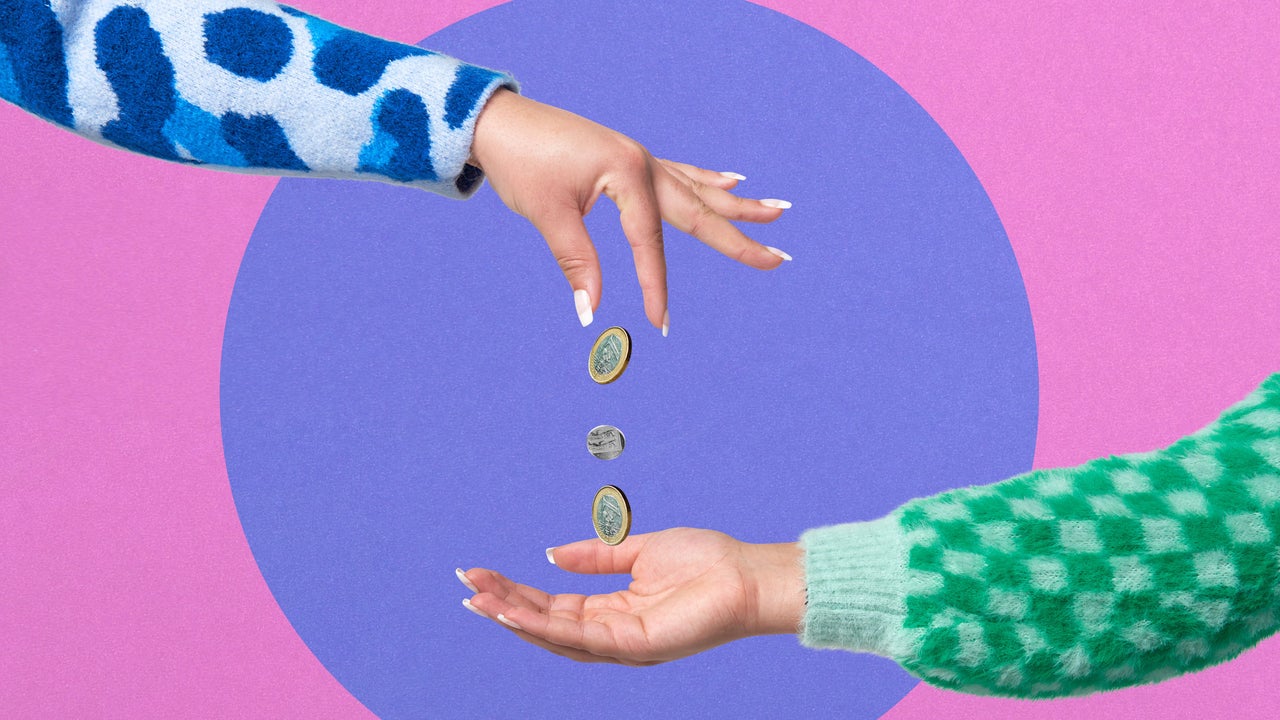
- Days later, participants were given another $40 and were told they had to spend it on freeing up time. Cleaning. Maintenance. Delivery. Paying someone to do something they didn’t want to do so they could use that time to do something they did want to do.
When people bought time instead of things, they felt happier, less stressed, and more satisfied.
Have a lot of money, and use some of it to buy back some time? You’ll be happier. Have a lot less money, and use some of it to buy back some time? You’ll also be happier. No matter how much you make, no matter how wealthy you are, buying a little time can make you happier.
There is a catch, though. As the researchers write: “Spending too much money on timesaving services could undermine perceptions of personal control by leading people to infer that they are unable to handle any daily tasks, potentially reducing well-being.”
I get that, but still: Most of us can’t afford to spend so much money buying time that we wind up feeling inadequate or incapable of handling daily tasks. I know how to shop for groceries. I know how to drive to a restaurant to pick up to-go items. I know how to cut grass. Paying someone else to do those things, which I occasionally do, doesn’t make me feel like I don’t have the skills to do those things.
So don’t worry about whether spending a little money to buy a little time will leave you feeling inadequate.
But do worry about ensuring you make a conscious decision about what you do with the time you free up, because hedonic adaptation can also apply to buying a little time.
The key to buying a little time is to consciously decide how you will use the time you “purchased.” Buying time will make you happier only if it feels intentional and purposeful: not because you don’t have the time, but because you want to use the time you have in a different way.
Instead of cleaning your house, you might decide—again, for buying a little time to make you happier, you have to make a conscious decision, and act on that decision—to spend the time you freed up with family or friends. Or working on a side project. Or reading. Or working out. Or pursuing a personal goal.
That’s what my entrepreneur friend does. One example: He used to spend two hours a week cutting his grass; now he uses that time to take his family to the park. (They call them “Wednesday Picnics.”)
The key isn’t to create a little “free” time. The key is to make a plan for the time you free up—to do something you want to do but can rarely find the time to do—and follow through on that plan.
That’s when money can buy you a little happiness, regardless of how much money you have or make.
The opinions expressed here by Inc.com columnists are their own, not those of Inc.com.
—By Jeff Haden
This article originally appeared on Fast Company’s sister website, Inc.com.
Inc. is the voice of the American entrepreneur. We inspire, inform, and document the most fascinating people in business: the risk-takers, the innovators, and the ultra-driven go-getters that represent the most dynamic force in the American economy.
Get Inc.’s free CPG newsletter, Packaged Goods, for the latest on the founders, investors, and trends reshaping consumer brands.
Originally published by fastcompany.com. Syndicated material does not necessarily reflect the views of Cosmopolitan Canada.